
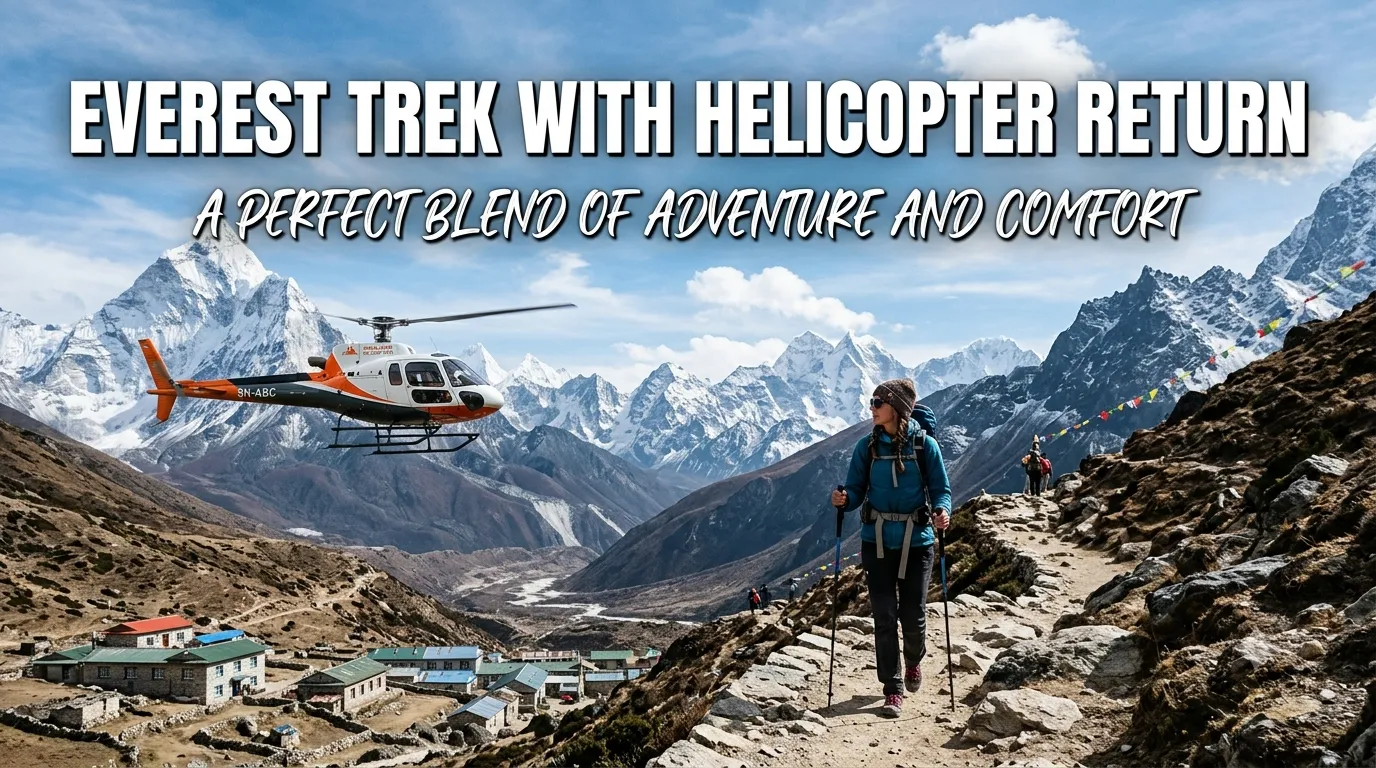
The Everest trek with helicopter return is an exceptional Himalayan journey designed for travelers who want to experience the legendary trekking trails of the Everest region while enjoying a fast, comfortable, and scenic return by air. This adventure combines the excitement of walking through traditional Sherpa villages, exploring ancient monasteries, crossing dramatic mountain landscapes, and reaching the famous Everest Base Camp with the luxury of returning by helicopter.
For many trekkers, the traditional Everest Base Camp journey requires nearly two weeks or more, including the return walk along the same route. Choosing a helicopter return reduces the overall travel time and adds an unforgettable aerial experience. It is an excellent option for travelers with limited vacation days, those who want to avoid retracing the same trail, and anyone seeking a more comfortable conclusion to a demanding high-altitude trek.
What Is an Everest Trek with Helicopter Return?
An Everest trek with helicopter return usually begins with a scenic flight to Lukla, the famous gateway to the Everest region. From Lukla, trekkers follow the classic trail through beautiful settlements, forests, suspension bridges, and high-altitude valleys. The journey typically passes through Phakding, Namche Bazaar, Tengboche, Dingboche, Lobuche, and Gorak Shep before reaching Everest Base Camp.
After completing the major trekking objectives, travelers return by helicopter instead of walking all the way back to Lukla. Depending on the itinerary and weather conditions, the helicopter may depart from Gorak Shep or another suitable location in the Khumbu region. The flight offers spectacular views of glaciers, valleys, mountain ridges, and remote villages.
Experience the Legendary Everest Trail
The trekking section is the heart of this remarkable adventure. Each day introduces a new landscape and a deeper connection with the Himalayan environment. The lower trail features green forests, rushing rivers, and impressive suspension bridges decorated with colorful prayer flags.
As the journey climbs higher, the scenery becomes more dramatic. Trekkers can enjoy magnificent views of Everest, Lhotse, Nuptse, Ama Dablam, Thamserku, and other Himalayan peaks. The changing landscape, from forested valleys to rugged alpine terrain, makes every stage of the trek memorable.
Walking through the Everest region also provides a genuine sense of achievement. The trail is physically demanding, but proper pacing and acclimatization help trekkers adapt to the increasing altitude.
Discover Sherpa Culture and Mountain Communities
One of the greatest attractions of the Everest trek with helicopter return is the opportunity to experience Sherpa culture. The Khumbu region is home to communities with deep connections to the mountains and Tibetan Buddhist traditions.
Namche Bazaar is a major highlight of the journey. This lively mountain town serves as an important trading and trekking center. Visitors can explore local shops, cafés, viewpoints, and cultural attractions while spending valuable time acclimatizing.
Another important stop is Tengboche, known for its beautiful monastery and outstanding mountain surroundings. Prayer wheels, mani stones, Buddhist monuments, and colorful flags appear throughout the trail, adding a strong spiritual character to the journey.
Reaching Everest Base Camp
Reaching Everest Base Camp is the main goal for many trekkers. Located in a dramatic high-altitude environment, the base camp area offers a close look at the rugged beauty of the Khumbu Glacier and surrounding peaks.
The final approach is challenging because of the altitude and rocky terrain. However, standing at the base of the world’s highest mountain is a deeply rewarding experience. Trekkers often celebrate the moment with photographs, group memories, and a strong sense of personal accomplishment.
Although the summit of Everest is not always clearly visible from the base camp itself, the surrounding landscape is extraordinary. Ice formations, glacier views, and towering mountain walls create a powerful Himalayan atmosphere.
Scenic Helicopter Return Experience
The helicopter flight is what makes this journey different from a standard trekking itinerary. After days of walking through valleys and mountain settlements, travelers suddenly gain a completely new perspective from the air.
The scenic return may reveal sweeping views of the Khumbu Glacier, high ridges, deep river valleys, isolated villages, and snow-covered peaks. Places that took several days to cross on foot can be viewed from above within a relatively short flight.
The helicopter return also saves time and reduces the physical strain of descending along the same route. For many travelers, this combination of trekking and aerial sightseeing creates a more varied and satisfying experience.
Main Benefits of Choosing a Helicopter Return
There are several reasons why travelers prefer an Everest trek with helicopter return. The most important advantage is time efficiency. Instead of spending several additional days walking back toward Lukla, trekkers can complete the return journey much faster.
Another benefit is convenience. After reaching high-altitude destinations, many trekkers feel tired from continuous walking. A helicopter return provides a comfortable alternative while preserving the achievement of completing the main trekking route.
It also adds significant scenic value. The aerial journey provides views that are impossible to experience from the ground, making the return flight a major adventure rather than simply a transportation service.
Best Time for the Journey
The best seasons for an Everest trek are generally spring and autumn. Spring, particularly from March to May, offers relatively stable conditions, improving temperatures, and beautiful mountain scenery. Autumn, from September to November, is popular for clear skies, excellent visibility, and favorable trekking conditions.
Winter trekking is possible for experienced and well-prepared travelers, but temperatures can be extremely cold at higher elevations. The summer monsoon season may bring clouds, rain, slippery trails, and possible flight disruptions.
Weather plays an especially important role in helicopter operations. Mountain flights depend on visibility, wind, and safe landing conditions, so travelers should maintain some flexibility in their schedules.
Preparation and Acclimatization
Good preparation is essential for a successful Everest trek with helicopter return. Trekkers should build cardiovascular fitness, leg strength, and endurance before arriving in Nepal. Regular hiking, stair climbing, cycling, and long-distance walking can be useful forms of preparation.
Acclimatization is equally important. The itinerary should include sufficient time for the body to adjust to higher elevations. Trekkers should walk at a steady pace, stay hydrated, eat properly, and pay attention to signs of altitude-related illness.
Quality equipment is also necessary. Warm layers, reliable trekking boots, a suitable sleeping bag, gloves, sunglasses, sun protection, and a comfortable backpack can significantly improve the overall experience.
Classic Everest Base Camp Experience: A Journey to the Heart of the Himalayas
The classic Everest Base Camp experience is one of the most iconic trekking adventures in the world. It takes travelers deep into the magnificent Himalayas, where towering peaks, traditional Sherpa villages, ancient monasteries, and dramatic mountain landscapes create an unforgettable journey. For adventure lovers, reaching Everest Base Camp is not simply about arriving at a destination. It is about experiencing the culture, natural beauty, challenges, and spirit of the Everest region.
Located in the Khumbu region of Nepal, Everest Base Camp attracts trekkers from around the world. The journey follows historic mountain trails used by local communities and legendary mountaineers. Along the way, trekkers enjoy breathtaking views of Mount Everest and other famous Himalayan peaks while discovering the unique lifestyle of the Sherpa people.
Beginning the Journey to Everest
The classic trek usually begins with a scenic flight from Kathmandu to Lukla. The flight itself is an exciting introduction to the mountains, offering spectacular views of green hills, deep valleys, and snow-covered peaks. After landing in Lukla, the trekking adventure begins on a well-established trail through the Khumbu region.
The first stages of the journey pass through charming settlements, suspension bridges, forests, and river valleys. Trekkers commonly continue toward Phakding before making their way to Namche Bazaar, one of the most important towns in the Everest region.
Namche Bazaar is a major highlight of the classic Everest Base Camp experience. Surrounded by mountains, this lively Sherpa town offers comfortable lodges, cafes, shops, and beautiful viewpoints. It is also an important acclimatization stop, allowing trekkers to adjust gradually to the increasing altitude.
Walking Through Sherpa Culture
One of the most rewarding aspects of the journey is the opportunity to experience Sherpa culture. The Everest region is home to communities with deep spiritual traditions and a strong connection to the mountains. Colorful prayer flags, mani stones, prayer wheels, and Buddhist monasteries can be seen throughout the route.
The famous Tengboche Monastery is among the cultural highlights of the trek. Set against a spectacular Himalayan backdrop, the monastery provides a peaceful atmosphere and a deeper understanding of local Buddhist traditions. From the surrounding area, trekkers can enjoy impressive views of Everest, Ama Dablam, Lhotse, and other peaks.
These cultural encounters make the trek much more meaningful. The classic Everest Base Camp experience combines physical adventure with genuine opportunities to learn about local history, beliefs, hospitality, and mountain life.
Spectacular Himalayan Scenery
The scenery becomes increasingly dramatic as the trek moves higher. Forested landscapes gradually give way to open alpine terrain, rocky valleys, glaciers, and enormous snow-covered mountains. Every day presents a different perspective of the Himalayas.
Ama Dablam is often considered one of the most beautiful mountains visible during the trek. Other prominent peaks include Lhotse, Nuptse, Thamserku, and Pumori. Mount Everest itself appears from several viewpoints, although surrounding peaks can sometimes partially hide its summit.
The changing landscapes are a major reason why this route remains so popular. Trekkers do not simply walk toward Base Camp. They travel through one of the most visually impressive mountain regions on Earth.
Reaching Everest Base Camp
As trekkers continue through Dingboche, Lobuche, and Gorak Shep, the environment becomes more remote and rugged. The thin air makes walking more demanding, so a steady pace and proper acclimatization are essential.
The final approach to Everest Base Camp is filled with anticipation. The trail crosses challenging glacial terrain near the Khumbu Glacier, surrounded by dramatic mountain scenery. Reaching Base Camp at approximately 5,364 meters is an emotional achievement for many trekkers.
Standing at the base of the world’s highest mountain creates a powerful sense of accomplishment. The area offers close views of the Khumbu Icefall, glacier formations, and surrounding Himalayan giants. During the main climbing season, expedition activity may add another fascinating dimension to the atmosphere.
Sunrise from Kala Patthar
For many travelers, the journey is not complete without climbing Kala Patthar. This famous viewpoint is widely regarded as one of the best places to enjoy close panoramic views of Mount Everest.
The ascent is physically demanding because of the high altitude, but the reward is extraordinary. At sunrise or during clear morning conditions, the surrounding peaks can appear in brilliant golden light. Everest, Nuptse, Lhotse, and Pumori dominate the skyline, creating one of the most memorable scenes of the entire trek.
Kala Patthar adds a remarkable visual highlight to the classic Everest Base Camp experience and gives trekkers a perspective that is difficult to find elsewhere.
Physical Challenge and Acclimatization
Trekking to Everest Base Camp requires preparation, patience, and respect for altitude. Although technical climbing skills are generally not required, trekkers must be comfortable walking for several hours each day over uneven mountain terrain.
Acclimatization is a critical part of a safe itinerary. Rest and adjustment days are commonly included in places such as Namche Bazaar and Dingboche. These stops help the body adapt to reduced oxygen levels at higher elevations.
Good physical fitness, proper hydration, suitable clothing, and a sensible pace can significantly improve the trekking experience. Travelers should avoid rushing and pay attention to signs of altitude-related illness.
Best Time for the Trek
Spring and autumn are generally considered the most popular seasons for trekking in the Everest region. Spring, particularly from March to May, often brings pleasant conditions and active mountaineering expeditions. Autumn, especially from late September through November, is known for clearer skies and excellent mountain visibility.
Winter trekking is also possible for experienced and well-prepared travelers, although temperatures can become extremely cold. Weather conditions in the Himalayas can change quickly, so flexibility and proper equipment remain important in every season.
Why Choose the Classic Route?
The classic route offers a complete combination of adventure, scenery, culture, and personal achievement. Unlike faster travel options, trekking allows visitors to experience the gradual transformation of the landscape and build a meaningful connection with the region.
Each village, monastery, suspension bridge, mountain viewpoint, and conversation with local people becomes part of the journey. The slow progression toward Base Camp also provides time to appreciate the scale and beauty of the Himalayas.
Conclusion
The classic Everest Base Camp experience is far more than a high-altitude trek. It is a remarkable journey through the cultural and natural heart of the Everest region. From the lively streets of Namche Bazaar and the peaceful surroundings of Tengboche Monastery to the rugged Khumbu Glacier and the panoramic views from Kala Patthar, every stage offers something memorable.
For travelers seeking a legendary Himalayan adventure, this trek delivers challenge, inspiration, and extraordinary scenery. Reaching Everest Base Camp is a proud achievement, but the true value lies in the entire journey. The landscapes, Sherpa hospitality, mountain culture, and sense of discovery make the classic Everest Base Camp experience one of the world’s most unforgettable trekking adventures.
