
Introduction
Not every Himalayan adventure needs two weeks of leave and a high-altitude fitness plan. The Australian Camp and Dhampus Village trek is one of Nepal’s most accessible walks. It starts less than an hour from Pokhara and delivers sweeping views of Annapurna South, Hiunchuli, Machapuchare (Fishtail), and on clear days, Dhaulagiri and Manaslu.
It suits first-time trekkers, families, solo travelers with a day or two to spare, and anyone who wants mountain scenery and village culture without extreme altitude. This guide covers what to expect, when to go, how to prepare, and how to get the most from the trail.
About the Trek
The route climbs gently through terraced farmland, rhododendron and oak forest, and Gurung and Brahmin villages on the southern edge of the Annapurna Conservation Area. Most trekkers start at Phedi, a roadside village roughly 20 kilometers from Pokhara, and climb to Dhampus (about 1,650 meters). From there the trail continues to Pothana, Deurali, and finally Australian Camp at about 2,060 meters.
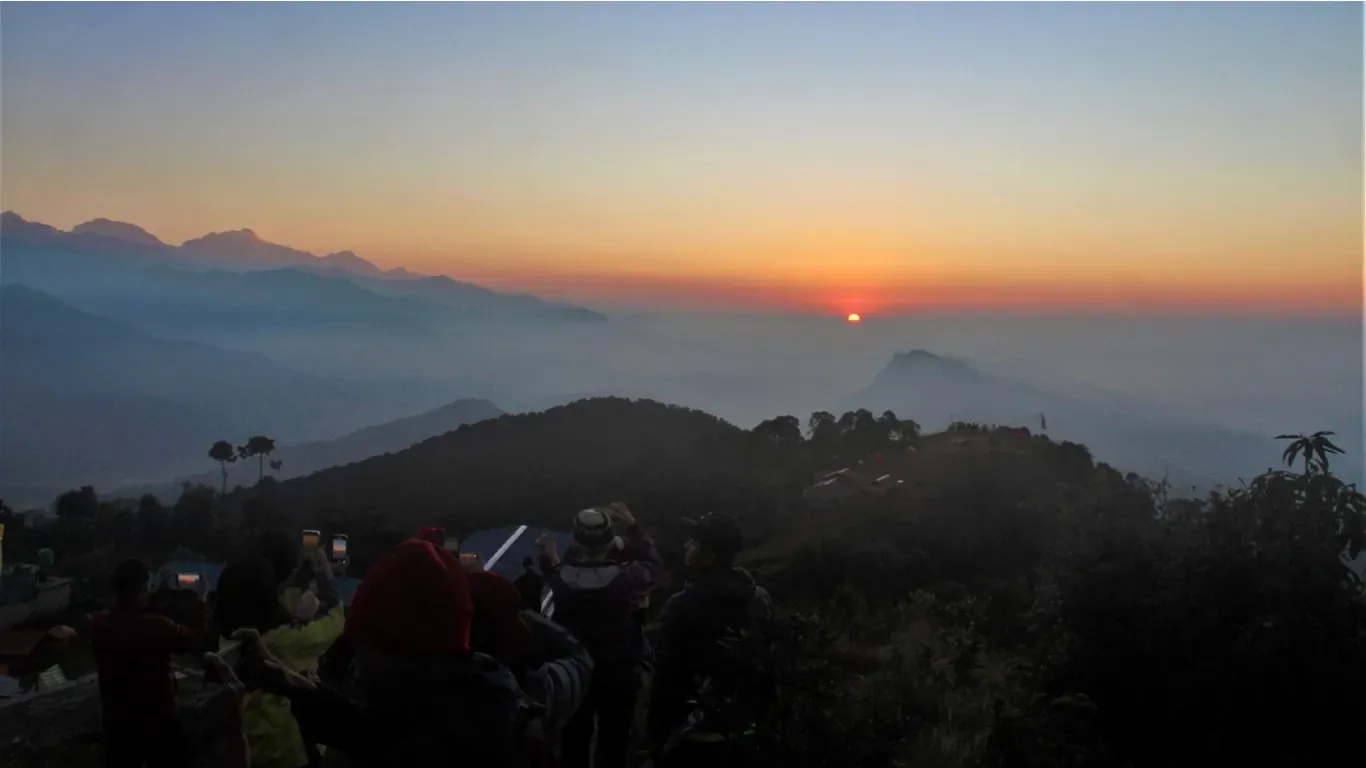
Australian Camp is a hilltop clearing with an unobstructed Himalayan panorama. It is said to have gained its name from Australian visitors who camped here years ago, and the name stuck. Today it is a quiet viewpoint with a handful of teahouses and basic lodges, popular for sunrise.
Quick facts
-
Region: Annapurna foothills, Kaski District, Gandaki Province
-
Duration: 1 to 2 days (overnight at Australian Camp or Dhampus)
-
Maximum altitude: About 2,060 meters
-
Difficulty: Easy to moderate
-
Trek distance: Roughly 10 to 15 km depending on route
-
Best seasons: March to May and October to November
-
Accommodation: Teahouses and homestays
Why Choose This Trek?
Mountain views with minimal effort. Few treks offer this much scenery for so little climbing. The sunrise panorama from Australian Camp rivals views you would normally earn over many days of walking.
Low altitude, low risk. At around 2,000 meters, altitude sickness is very unlikely, which makes the trek suitable for beginners, children, and older travelers with reasonable fitness.
Cultural immersion. The trail runs through working villages where you can see traditional stone houses, millet and rice terraces, and daily rural life. Staying in a local homestay gives you a real sense of hospitality in the hills.
Easy logistics. Pokhara is well connected by flights and tourist buses from Kathmandu, and the trailhead is a short taxi ride away. You can start in the morning and be eating dal bhat on the trail by lunch.
A perfect acclimatization or warm-up hike. Many trekkers use it as a shakedown before longer routes like Poon Hill, Annapurna Base Camp, or Mardi Himal.
Sample Itinerary
Option 1: Two-Day Trek
Day 1: Pokhara to Phedi, then to Dhampus and Australian Camp (5 to 6 hours of walking)
Take a taxi from Pokhara to Phedi, about 40 minutes by road. The trail begins with a stone-paved climb through farmland toward Dhampus. The ascent is steady, and you will pass small tea shops where you can stop for ginger tea. Dhampus makes a good rest stop, with views of Machapuchare on clear mornings.
From Dhampus, continue through forest to Pothana and then Deurali. The final stretch to Australian Camp is a gentle climb. Arrive by mid-afternoon, check into a teahouse, and settle in for sunset views.
Day 2: Sunrise and descent (3 to 4 hours)
Wake early for the sunrise, when the peaks turn gold and pink before the clouds roll in. After breakfast, descend via Dhampus or by an alternate trail toward Kande. From Kande, taxis and buses run back to Pokhara.
Option 2: One-Day Hike
Fit trekkers can do the route as a long day hike. Start at Phedi early, reach Australian Camp by late morning, and return to Kande or Phedi in the afternoon. It is tiring but doable, though you miss the sunrise, which is the highlight.
Option 3: Extended Trek
Add a night in Dhampus or continue toward Landruk to connect with the wider Annapurna foothill routes. This works well if you want a slower pace and more village time.
Best Time to Visit
Autumn (October to November) is the most popular window. Skies are clear, temperatures are comfortable, and mountain views are at their sharpest. It is also the busiest season, so book lodges ahead if you can.
Spring (March to May) brings warmer weather and blooming rhododendrons, which add color to the forest sections. Mornings are clear, though afternoon haze can appear later in the season.
Winter (December to February) is cold at night but often brings crisp, clear days. The trail is quiet, and snow is uncommon at this altitude.
Monsoon (June to September) is the least recommended time. Trails get muddy and leech-prone, and clouds often hide the mountains. If you go anyway, carry rain gear and accept that views may be limited.
Permits and Costs
The trek falls inside the Annapurna Conservation Area, so you will generally need the ACAP (Annapurna Conservation Area Permit), and local entry fees may also apply. Permit rules and prices change from time to time, so confirm current requirements with the Nepal Tourism Board office in Pokhara or a licensed trekking agency before you go.
Typical budget items to plan for:
-
Permit and entry fees
-
Taxi to and from the trailhead
-
Teahouse accommodation, usually inexpensive, often with a meal purchase expected
-
Meals and drinks on the trail
-
Optional guide or porter fees
Independent trekkers can do this route on a modest budget. If you prefer a guide, local agencies in Pokhara offer guided packages that include transport, permits, and lodging.
Do You Need a Guide?
For this trek, a guide is optional. The trail is well marked, busy in season, and lined with teahouses. Solo travelers and small groups regularly walk it independently.
A guide is still worth considering if you want cultural and natural history insight, are traveling with children, or are trekking in the off-season when fewer people are around. Hiring a local guide also supports the community economy.
What to Pack
Because the trek is short, you can travel light. A small daypack is enough if you stay overnight.
Essentials
-
Sturdy walking shoes or light trekking boots with good grip
-
Moisture-wicking layers and a warm fleece or down jacket for the cold mornings
-
Waterproof jacket or poncho
-
Sun hat, sunglasses, and sunscreen
-
Reusable water bottle and purification tablets or a filter
-
Headlamp or torch for pre-dawn starts
-
Basic first-aid kit, including blister care
-
Cash in small notes, since ATMs are not available on the trail
-
Power bank and camera or phone
Nice extras: trekking poles for the descent, a lightweight sleeping bag liner, and a small towel.
Practical Tips for a Better Trek
-
Start early. Clouds often build by mid-morning, so early starts give you the best views and cooler walking conditions.
-
Sleep at Australian Camp. The sunrise is the main reward, and it is worth the overnight stay.
-
Pace yourself. The climb is steady rather than steep, so a slow rhythm will keep you comfortable.
-
Stay hydrated. Even at modest altitude, the climb and sun can dehydrate you.
-
Respect local customs. Dress modestly in villages, ask before photographing people, and greet locals with a friendly “Namaste.”
-
Leave no trace. Carry out plastic waste where possible and avoid single-use bottles.
-
Check the forecast. Weather in the hills can change quickly, especially in shoulder seasons.
-
Buy travel insurance. Choose a policy that covers trekking, even for a short, low-altitude walk.
Food and Accommodation
Teahouses along the route serve simple, hearty meals. Dal bhat (lentils, rice, and vegetables) is the staple and is usually refillable, which makes it a good choice for fueling a climb. You will also find noodle soup, fried rice, momos, eggs, and pancakes, plus hot tea and coffee.
Rooms are basic, typically twin beds with blankets, and shared bathrooms. Facilities are more modest at Australian Camp than in Dhampus, so set your expectations accordingly. Homestays offer a warmer, more personal experience and often include home-cooked meals.
Who Is This Trek For?
-
First-time trekkers wanting a gentle introduction to the Himalayas
-
Families looking for an easy, rewarding outing with children who are comfortable walking several hours
-
Busy travelers with only a day or two to spare in Pokhara
-
Photographers chasing sunrise light on the Annapurna range
-
Experienced trekkers looking for a relaxed acclimatization walk
Conclusion
The Australian Camp and Dhampus Village trek proves that a memorable Himalayan experience does not have to be long or difficult. In a day or two, you can walk through terraced hillsides, stay in a village teahouse, and watch sunrise light up some of the world’s most famous peaks. It is affordable, easy to organize, and welcoming to beginners.
Whether you use it as a first taste of trekking in Nepal or a peaceful break from the lakeside bustle of Pokhara, this short trail delivers scenery, culture, and calm in a compact package. Pack light, start early, and let the mountains do the rest.
Frequently Asked Questions
How difficult is the Australian Camp trek?
It is easy to moderate. The trail is mostly stone steps and dirt path with a steady climb, and no technical sections.
How long does it take to reach Australian Camp from Dhampus?
Usually around 2.5 to 3.5 hours at a relaxed pace, depending on rest stops.
Is there a risk of altitude sickness?
The risk is very low, as the highest point is around 2,060 meters.
Can I do this trek in the monsoon?
You can, but expect rain, mud, leeches, and obscured views. Autumn and spring are far better.
